Resources for Writers

To Self-Publish... or Not?
Writing a book is just the first step. The next step is how to get it published.
There are three basic routes to publishing: Traditional Publishing, Hybrid Publishing, and Self-Publishing.
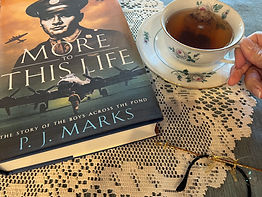
My own book, More to This Life: The Story of the Boys Across the Pond, was self-published with Amazon KDP. It's been out for seven weeks and so far has sold over 150 copies. My goal related to my WWII historical fiction book, which was inspired by a family story, was to memorialize the men involved, rather than to generate a best-seller. Of course, everyone dreams that their book may 'hit,' but the driver in my case was simply to tell this story for whoever was drawn to listen. So I was very pleasantly surprised at the volume of sales, especially after I viewed these statistics from multiple sources:
-
Over 90% of self-published books sell under 100 copies during their lifetime.
-
The average self-published author will earn under $1,000 from book sales during the year.
-
The average self-published title will sell around 250 copies during its lifetime.
At first glance, these numbers may seem contradictory—but they reflect the uneven reality of publishing, where many books sell quietly while a few account for most sales.
Reasons to Self-Publish:
1. (Much) shorter turnaround time from book completion to publishing. Some writers have cited two or more years from the signing of the contract to the publishing of the book. With self-publishing, once you are satisfied that your manuscript and cover are 'print-ready,' barring any error messages, you can upload to Amazon and see your book on their website within a few days.
2. You want to retain total creative control. With self-publishing, you decide the plot, the layout, the cover design. You aren't bound by any contractual obligation to defer those decisions to the publisher.
3. You desire (or don't mind) direct connection to your readers. With traditional publishing, the publisher guides the marketing of your book and the communication with readers. With self-publishing, the marketing is up to you.
Things to Consider
-
You don't have to be a marketing whiz to publicize your book. In my case, I had ZERO social media footprint. That's right, no Facebook following, no Instagram, no TikTok... nothing. Call me 'old school,' I'd just never felt the need to put myself outward-facing to millions of strangers. Yet I was aware that if I was going to write a book, I had to at least dip my toe into the public eye. So last year, I got a Substack account and began writing short posts. Most were about day-to-day reflections, not about my book-writing adventures. And in the beginning, I had only a handful of followers. But every little bit counts. A few months before my book was published, I began putting a few posts on Instagram and actively looked for people I knew that I could connect with. Most of them already knew about my book, but social media has the potential to multiply your viewers. I also posted a few things on Pinterest. The advantage of Pinterest is that a Pin isn't limited in time by 'when' you pin it. Rather, a potential reader could land upon it in ten years without any additional effort on my part. It's a silent ad, well into the future.
-
If you want a quality book, it pays to invest in some editorial oversight. Even without a publisher, a writer can hire freelance editors to perform a variety of edits to polish their writing. These can be found in writing communities easily located online. In my case, Reedsy is a potential resource for editors, and, much like TripAdvisor, you can see reviews by other writers about their experience with any given editor. Because my writing was Historical Fiction, I participated in membership with the History Quill, an organization that offers readers a variety of resources. Since I didn't belong to any other 'writing circle' or 'critique group' and didn't really know any other writers, this organization was an invaluable source for beta readers, copy-editors, and proofreaders. Before venturing into any of these options, consider your budget. These services can be found at varying levels of cost, so evaluate what you're willing to invest.
Other Things Worth Reviewing About Yourself Before You Decide
-
Your tolerance for uncertainty. Self-publishing involves many decisions without clear “right” answers. If you’re comfortable making thoughtful choices and adjusting as you go—or at least willing to keep moving once you’re already underway (much like I do when I find myself staring down a particularly steep ski trail)—this path can suit you well.
-
Your definition of success. Clarify what you hope a book will do—reach a specific audience, preserve a story, open conversation. Knowing your ultimate goal can make the publishing choice clearer.
Takeaway
Self-publishing can be an agonizing process at times, but it can also be deeply satisfying. For me, it meant learning as I went, making imperfect decisions, and continuing forward even when the path felt uncertain. Whichever route you choose, know that there are resources, communities, and fellow writers who have walked it before you—and are willing to help light the way.
In the end, publishing is less about platforms or pathways than it is about intention. When you’re clear on why you’re telling a story, the question of how to publish it often becomes less daunting—and a little more human.